Mugshot exposure and memory
In criminal investigations, witnesses sometimes view a database of photographs before attending a formal identification parade. This exercise simulates that process.
- You will first view a single photograph and describe the person.
- You will then carry out a brief unrelated task.
- Finally, you will view a lineup and decide whether anyone there looks familiar.
Study this face
This person appeared in a recent case file. Study the face carefully.

Brief task
Before the lineup, please complete this short task. You will be shown five photographs. For each one, decide whether, based on appearance alone, you think this person could plausibly commit a robbery.
There are no correct answers — this is a judgement task. Press Yes or No for each face.
Could this person plausibly commit a robbery?
Ready for the lineup
You will now view a lineup. Look carefully at each person and decide whether you recognise anyone — and if so, from where.
Lineup
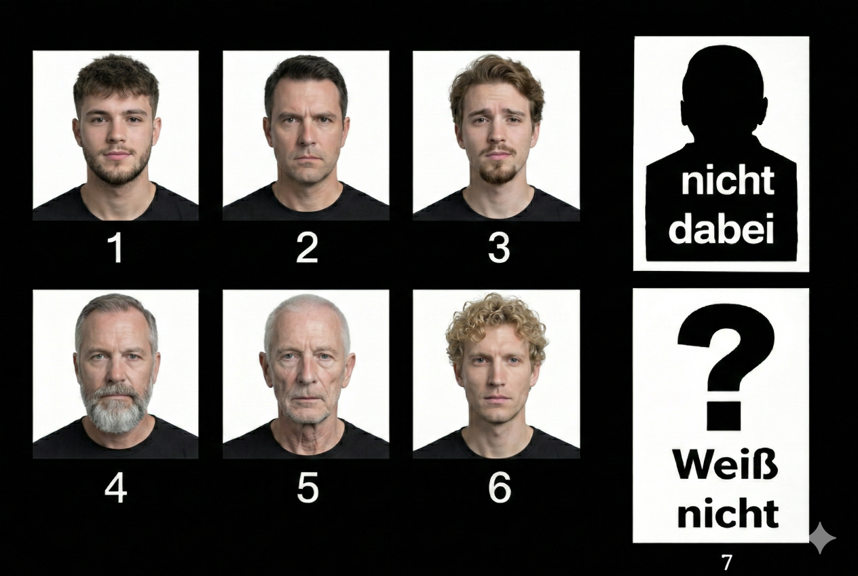
Does the person from the case photograph appear in this lineup?
Results
Your description
How readers chose from this lineup
What does this demonstrate? Position 2 is the actual perpetrator from the video. Position 6 is the person whose photograph you studied as the ‘case file’ image. An elevated choice rate at position 6 — relative to other filler positions — is consistent with unconscious transference: the familiarity acquired from the case photograph is misattributed to the crime event itself.
@deffenbacher2006 found that prior mugshot exposure significantly increased the probability that the same face was subsequently identified in a lineup — even when the person in the mugshot was never present at the crime. The witness genuinely recognises the face (they have seen it before), but the source of that recognition is wrong. This is one reason why sequential procedures and careful controls on prior photograph exposure matter in investigative practice.